Seeking relief in the hottest time of year

In tropical Thailand, the sun climbs high in the sky in April, bringing the peak of the hot season. It is also the time of Songkran, Thailand’s traditional New Year festival.
Songkran originally began as a solemn occasion in which people poured water over Buddha images and stupas for purification. Today, however, it is best known as one of the world’s largest water festivals, where people splash each other with water guns and buckets in lively street celebrations.
While the excitement of the water festival takes over the streets, this season also brings a quieter culinary pleasure. One such dish is khao chae, a traditional Thai royal cuisine in which rice is served in chilled water infused with the fragrance of jasmine.
Khao chae is accompanied by small side dishes that are richly seasoned with salty and sweet flavors. One essential item is luk kapi tod, a dish made by mixing seafood surimi with herbs and shrimp paste, shaping it into balls, and deep-frying them.
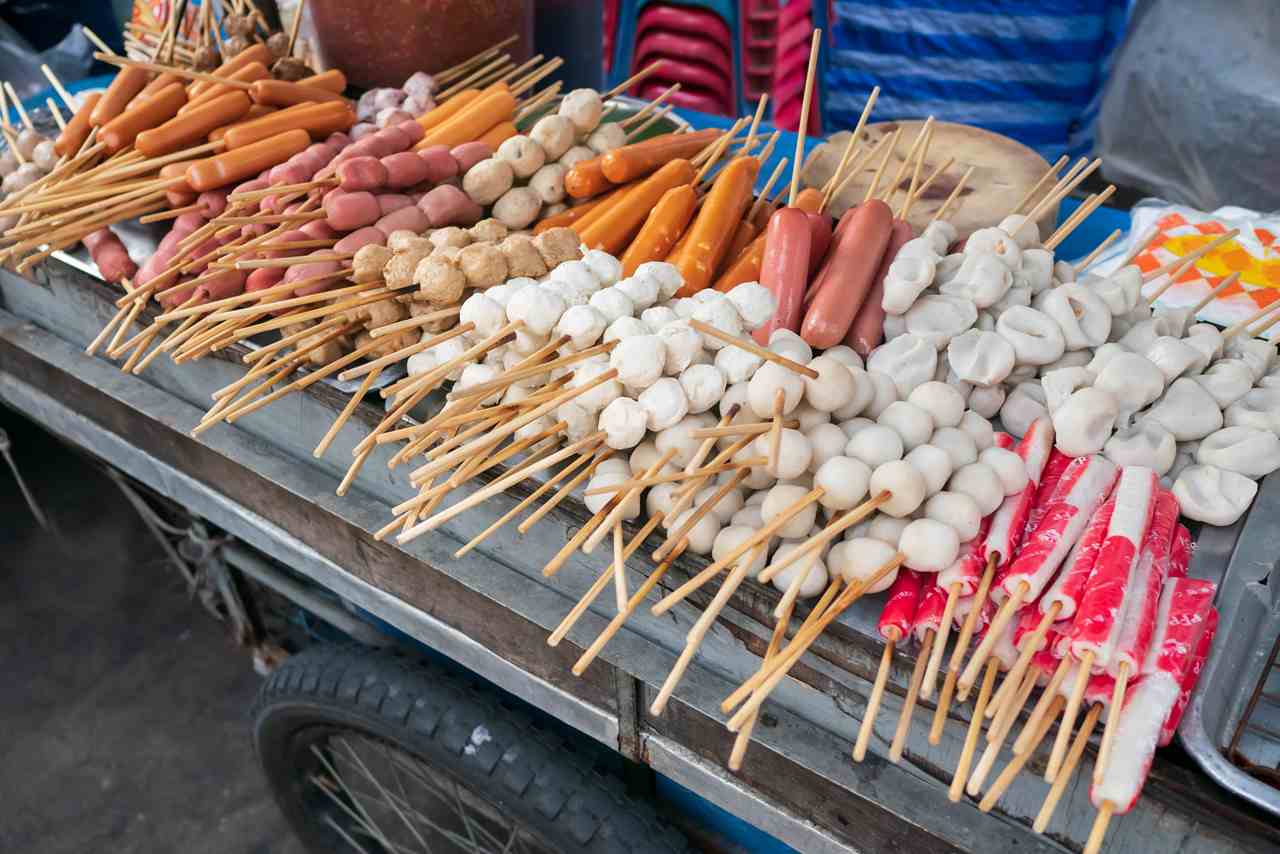
Seafood processed foods made from surimi like these are found not only in traditional cuisine, but also in everyday meals. In particular, fish balls and imitation crab are popular in Thailand and other Southeast Asian countries, enjoyed as grilled street-food skewers, ingredients in hot pot dishes such as Thai suki, and even as convenience-store snacks.
“What is the situation like in Bangkok supermarkets in April?”
However, what is not widely known is that the production of these familiar everyday foods is supported by Japanese machinery.
Japanese Technology Supporting Everyday Food Culture
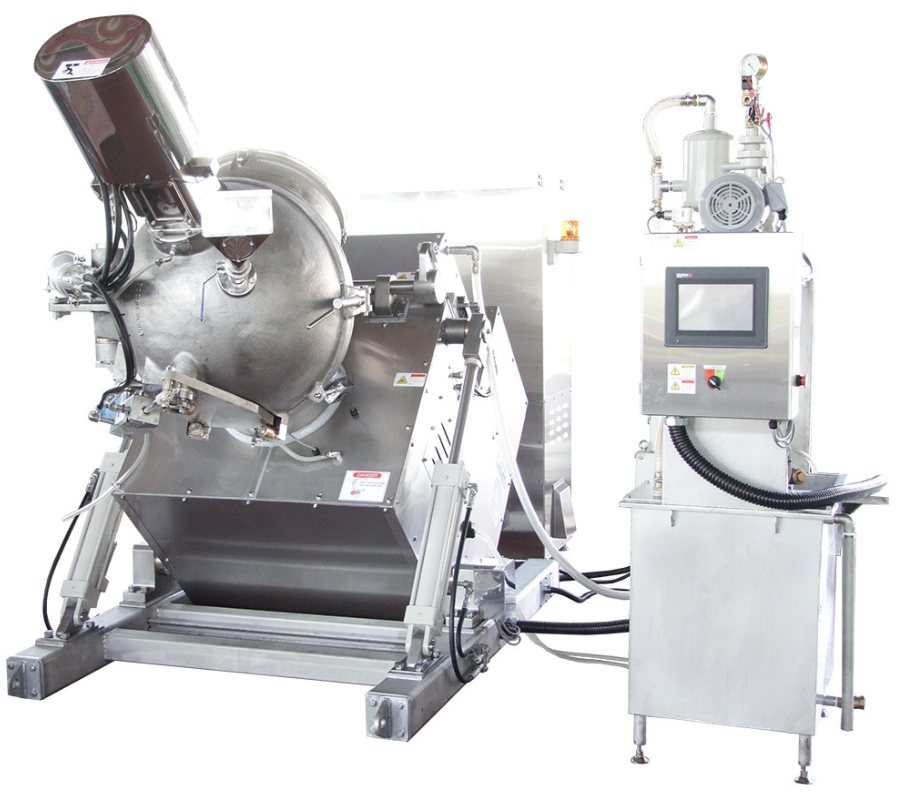
In Southeast Asia, surimi-based foods are generally expected to have a firmer bite and a springy, bouncy texture than their Japanese counterparts. Making that kind of appealing texture possible on a mass-production scale is Yanagiya Co., Ltd., a global manufacturer of crab stick production equipment headquartered in Ube, Yamaguchi Prefecture.
To bring out the unique texture and flavor of surimi products, precise control of factors such as salt level, temperature, and processing time is essential during the fish-paste preparation stage. Surimi is a delicate material, and even slight changes in these conditions can affect the final taste and texture.
To address this, Yanagiya developed its ball cutter, which can be programmed for fully automatic operation, enabling strict numerical control over factors such as salt level, temperature, and processing time.
Because these programs can be preset, users can easily reproduce the texture and flavor they are aiming for, while full automation also ensures consistently uniform product quality.
In addition, by creating a vacuum inside the bowl, the surimi can be kneaded without incorporating air. This makes it possible to produce surimi products with a denser texture and a firmer, more substantial bite.
The synergistic effect of the spherical bowl, the high-speed cutter knife set at an angle, and the baffle also makes it possible to cut, mix, and knead raw ingredients more quickly.
Yanagiya also provides comprehensive support for machine adjustment and customization in order to achieve the ideal texture and improve production efficiency on site.
In particular, when responding to requests from production sites, its experienced engineers first check how the machine is operating, then quickly prepare sketches and propose improvements. Through repeated in-house testing and fine adjustments to components and other details, they turn customers’ requests into practical solutions.
Because Yanagiya’s machines offer highly precise control, they can reduce weight variation during the forming process and help maintain stable yields in production. They are also known for their outstanding durability, with some machines built in the 1980s still in operation today. Precision and durability together support production lines that can continue running with minimal loss over the long term.
Building Trust Through a Commitment to Great Taste
Yanagiya is driven by a simple belief: it wants to be a machinery maker that helps create delicious food. That belief goes back to the company’s origins. Founded in 1916, Yanagiya began as a food manufacturer producing kamaboko. Because the company itself once stood on the production side, it has been able to understand firsthand the challenges faced on the factory floor and what customers truly need. That perspective still lives on in the way Yanagiya designs and builds its machines today.
Take the challenge of creating “good taste,” for example.
In Japan, surimi products are often eaten without further cooking, so many consumers prefer a juicy texture with higher moisture content. In Southeast Asia, however, these products are generally cooked before eating, so what matters more is firmness and bite that hold their shape during heating. Because preferred textures and flavors vary from region to region, products need to be tailored to the local idea of what tastes good.
Reflecting these differences in the final product requires careful attention, including machine adjustment, operational know-how, and customization. That is why Yanagiya brings its sales and engineering teams together to address each customer’s production challenges. The sales team does more than explain how to operate the equipment. They also provide detailed guidance on production methods and work closely with customers to understand their needs in depth. Based on those needs, Yanagiya’s engineers quickly propose and develop the necessary customizations.
For Yanagiya, every machine it delivers is treated almost like one of its own children. The company has a deeply rooted philosophy of continuing to care for its equipment long after it has been installed at a customer’s factory. In fact, even during the COVID-19 pandemic, when many companies were refraining from overseas travel, Yanagiya still rushed out to repair broken machines, despite the long quarantine periods involved. Customers were astonished, saying, “Yanagiya is the only company that would come even in a situation like this.” That response speaks volumes about the company’s philosophy.
With proper maintenance, Yanagiya’s machines offer exceptional durability, backed by the company’s technical expertise. Some units are still operating nearly 40 years after they were built. And no matter how good the surimi itself may be, if the precision of downstream processes such as forming is poor, defective products will be produced and yield will suffer. Yanagiya’s machines, by contrast, offer highly accurate control, enabling stable production of products that consistently meet specifications for weight and shape while minimizing raw-material loss.
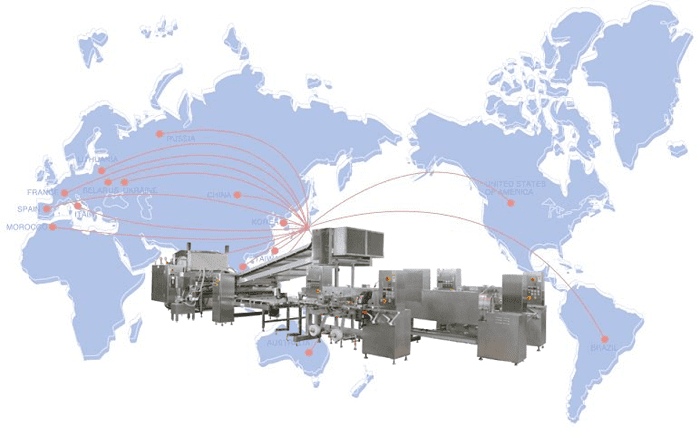
By continuing to face customers’ challenges head-on and using its technical expertise to deliver great taste, Yanagiya has earned an extraordinary level of trust from customers not only in Thailand, but around the world. Looking ahead, the company is also setting its sights on expansion into markets such as Egypt and India, with the goal of bringing the appeal of surimi and fish-paste products to more people worldwide.
From Seafood Processing to Packaging—Experience an Entire Production Line at FOOMA
Yanagiya’s technology is just one gateway into the potential of Japanese food machinery to support the world’s food industries.
At FOOMA JAPAN 2026, to be held at Tokyo Big Sight from June 2 to 5, 2026, leading Japanese equipment manufacturers with some of the world’s most advanced technologies will come together—not only for surimi production, but also for forming, heating, cooling, and packaging.
What awaits you there are not simply salespeople lining up catalogs, but engineers with a true maker’s mindset—people who listen to your vision of the ideal taste and begin sketching out solutions on the spot.
If you want to transform your country’s traditional flavors into the next global food industry opportunity, come and see, touch, and experience for yourself the advanced technology and on-site expertise that set Japan apart.
We hope you will find in Tokyo the right partner to unlock new possibilities for your factory—and for the food culture of your country.
Share!


Sign up for FOOMA JAPAN newsletter
The freshest news from the food world

Follow us on Social Media


Sign up for FOOMA JAPAN newsletter
The freshest news from the food world
Follow us on Social Media